Studio Noord · Strategic research
Brand & Competitive Landscape
Where Vlietstra stands in the northern water-infrastructure market, and the one move that turns sixty years of earned trust into a brand procurement teams can score. This is the public example of a positioning engagement — every competitor, figure, and quote is invented; the structure and method are the real thing.
Executive summary
Vlietstra has the rarest thing in its market: earned trust. Sixty years on the same assets, an archive no competitor can reconstruct, crews the waterschap field staff know by first name, and a repair-first record that sustainability scoring now rewards. That is reputation money cannot buy and a national contractor cannot fake.
And yet the brand spends that advantage instead of compounding it. The current identity — a 2014 website, three logo versions across the fleet, reports that leave the office as scanned PDFs — signals small and behind, at the exact moment tenders shifted from lowest-price to best-value scoring, where presentation, reporting, and digital capability carry real weight. The maturity is real; the brand hides it.
Three reads, and what they mean:
- The market is full of firms that "maintain water infrastructure." Almost none stand for something. The winners anchor on a stance the client wants to buy into — data-led stewardship, maintenance as craft — not a service list.
- Vlietstra's closest analog already out-narrates it. Fluvia turned the same fact Vlietstra owns — knowing the assets — into a data product and a named brand. Same truth, sharper telling.
- The fix is not to look bigger or newer. It is to claim a worldview only Vlietstra can credibly hold — one that converts age and locality from liabilities into the point.
Bottom line: Vlietstra does not have a credibility problem — field staff swear by it. It has a legibility problem: the trust exists in people's heads and nowhere a tender assessor can see. This document maps the landscape across five angles — positioning, brand & visual identity, findability, AI visibility, and social — and lands on the anchor that ties them together.
Positioning
Two things decide a firm's position in this market. Axis 1, earned trust & asset knowledge (track record, archive, relationships). Axis 2, a distinctive, ownable brand (can a tender board name what you stand for?). Vlietstra sits at the top of the first and near the bottom of the second. That single gap is the whole strategy.
Earned trust (vertical) against a distinctive, ownable brand (horizontal) — a representative span of the field. Conceptual, not to scale, and every dot fictional. Vlietstra holds the deepest trust in the set and one of the weakest brands — the largest gap, and therefore the largest upside, on the map.
Three scales
- The northern provinces — Vlietstra leads on substance, trails on legibility. The deepest asset archive and the fastest response times in the region, but the memorable local names are firms with a sharp line: PompTech speaks fluent installer, Polderman has made restraint its look. Vlietstra out-delivers them and under-positions them.
- National — a crowded "we maintain infrastructure" middle, with a few flags above it. Fluvia (asset data as a brand), Hollandia (the project-film machine), De Grebbe Groep (the rebranded incumbent). Vlietstra is respected where it is known — and unknown one province over.
- The benchmark — what a worldview does. The firms that win frameworks outside their home region do not win on capacity. They win on a stance the assessor can repeat in one sentence. That is the bar for the rebrand, not the local peers.
Brand & visual identity
The brand reads smaller and older than the firm is
This is the central tension, and it is fixable. Vlietstra's operation is modern — planned maintenance, fast response, a repair-first ethic ahead of its market — but its brand layer says otherwise: a 2014 single-page site, three logo generations on the road at once, scanned-PDF reporting. For a firm whose scarcest asset is earned trust, the brand actively hides the thing that matters most.
- Trust is invisible in the brand. Sixty years, the archive, the renewals — none of it is felt at any touchpoint an assessor sees.
- The distinctive material is undocumented. The repair-first record exists in the job archive and has never been added up, published, or claimed.
The bar to design against
The useful truth from scanning the field (the full firm-by-firm scan is next): almost no brand in this sector is genuinely designed. The category defaults to machine photos, safety-orange accents, and template sites. The frontier is a handful of braver brands:
| Firm | What they prove |
|---|---|
| Fluvia | The high-water mark. Asset data turned into the brand itself — dashboards, a named annual report, reporting a waterschap board can forward. The product is the marketing. |
| Damsté Infra | A pure typographic identity carried with total discipline. Proof one committed idea beats a big budget. |
| De Grebbe Groep | Proof an incumbent can rebrand into something ownable and win frameworks on the strength of it — the closest peer-scale precedent for Vlietstra's move. |
| PompTech | Brand as audience filter: catalogs and copy written in the installer's own idiom. Distinctiveness from a stance, not a style. |
| Polderman | Proof that disciplined restraint reads as premium in a loud, high-vis category. |
The direction for Vlietstra is not "look bigger" or "look newer." It is confident restraint plus one ownable idea — a visual language that carries sixty years of weight and makes the archive legible. Maturity, expressed as care rather than age. Nobody in this field has paired genuine asset knowledge with genuine craft; that is the open lane.
The field, firm by firm
A firsthand scan of the brands Vlietstra is measured against. Taglines are representative of each brand's register (and, like the firms, invented); the design score is an opinionated 1–5 (5 = reference-grade). The pattern is consistent: visual sameness is the rule, and the strongest brands win on a sharp verbal idea, not graphics.
National contractors
| Firm | Tagline | Visual style & tone | Design |
|---|---|---|---|
| Nationale Infra Groep | "Samen bouwen aan morgen." | Corporate blue, drone footage, CSR-forward. Big, polished, anonymous. | 2.5 |
| Hollandia Waterbouw | "Werk dat blijft." | Cinematic project films, confident type. The strongest national brand — and it still says nothing specific. | 3.5 |
| De Grebbe Groep | "Beheer is een vak." | Recently rebranded: warm palette, real art direction, maintenance reframed as craft. The precedent. | 4 |
Regional mid-size
| Firm | Tagline | Visual style & tone | Design |
|---|---|---|---|
| Fluvia | "Uw areaal, in beeld." | Data-led: dashboards and a named annual report as the brand surface. The sharpest position in the field. | 3.5 |
| Terpstra & Zn. | "Al drie generaties betrouwbaar." | Heritage-led but dusty — proof that "generations" without craft reads as old, not deep. The cautionary tale. | 2 |
| IJsselTechniek | "Techniek die doorwerkt." | Machine photography, safety orange, capability lists. The category default. | 2 |
| Polderman | "Rustig vakwerk." | Quiet monochrome restraint; two words doing the work. | 3 |
Specialists & local
| Firm | Tagline | Visual style & tone | Design |
|---|---|---|---|
| PompTech | "Voor wie zelf sleutelt." | Catalog-dense, written for installers. Brand as audience filter. | 3 |
| AquaNoord | "Snel ter plaatse." | Van-livery green, phone number as hero. Honest, small. | 1.5 |
| Gebr. Dijkman | "Gewoon goed werk." | A Facebook page and a reputation. No brand surface at all. | 1 |
| Van Marle Infra | "Uw partner in waterbeheer." | Template site, stock photos. Interchangeable. | 1.5 |
What the scan says
- Two safe defaults own the category: machine photography with safety orange, and heritage lines without craft behind them. Over and over.
- Differentiation today is verbal, not visual. The memorable firms win on one device — "beheer is een vak," "uw areaal, in beeld," "rustig vakwerk" — not on graphics. Which is precisely the opening: with the field clustered on defaults, a genuinely designed identity stands out instantly.
- The open lane for Vlietstra: pair the deepest asset knowledge in the region with genuine craft. Terpstra proves heritage alone curdles; Fluvia proves data alone stays cold. Vlietstra can hold both.
Findability
Vlietstra's findable footprint is thin and stale — which costs it exactly where best-value tenders are decided: the desk research an assessor does before scoring.
- One page, no depth. The 2014 site has no service pages, no project stories, and no content for any query a waterschap asset manager actually types.
- Real assets exist but are invisible. Sixty years of inspection records and repair outcomes — the raw material for the most citable content in the category — sit in the job archive, unpublished.
- No flagship artifact. Fluvia's annual areaal report is the model: one recurring, citable document the whole sector references. A "state of the kunstwerken" report for the northern provinces is unclaimed.
→ The move: a real site structured around the work, project stories with the firm's own photography, and one recurring flagship artifact drawn from the archive.
AI visibility
Procurement and asset teams increasingly vet contractors the way they vet everything else — they ask an AI assistant "who maintains pump stations in the northern provinces?" and act on the named answer. For a firm whose pipeline runs on word of mouth, being named in that answer is the new word of mouth.
Where Vlietstra stands
- Nearly invisible. With one thin page and no structured data, there is almost nothing for a model to cite. Word of mouth does not train a language model.
- The named firms have editorial density. Fluvia and Hollandia surface in round-ups and trade coverage; assistants repeat what third parties write.
- The bar is low. This category is so sparsely covered that a modest, consistent editorial footprint would make Vlietstra one of the few nameable answers in its region.
Why the anchor matters here too
Language models reward firms described in consistent, specific language. "A reliable regional contractor" averages into noise; a sharp, repeated worldview gives third parties — and the model — a crisp phrase to attach to Vlietstra. A distinctive anchor is not just a brand asset; it is an AI-visibility asset.
Social media
On reach, Vlietstra leads its local peers — a quietly strong LinkedIn following built on crew photos and word of mouth — but the regional table inverts it, and the gap tracks one thing: owning a flagship content asset, which Vlietstra does not have.
LinkedIn following, local field (May 2026, invented figures, ±10% register). Vlietstra leads its immediate peers.
Zoom out — the regional field
| Firm | Following (est.) | Flagship content engine |
|---|---|---|
| Nationale Infra Groep | ~45k | Corporate content machine — CSR, recruitment, projects |
| Hollandia Waterbouw | ~28k | Project films with real production budgets |
| De Grebbe Groep | ~9k | The rebrand campaign + craft essays |
| Fluvia | ~6.5k | The annual areaal report — cited across the sector |
| Terpstra & Zn. | ~3.1k | None |
| Vlietstra | ~2.4k | None yet — the gap |
| Damsté Infra | ~1.2k | One annual essay, read far beyond its following |
Invented figures; the point is the pattern, not the decimals.
- Reach follows a flagship, not a posting cadence. Damsté has half Vlietstra's following and more sector influence off one annual essay; Fluvia's report is cited by the clients themselves.
- Vlietstra's crew photos are the seed of something real — the sector's most humane content, posted without a strategy.
- The move is not "post more" — it is one flagship drawn from the archive, paired with the anchor, so the reach compounds into recognition.
Earned reputation
The proof Vlietstra already owns
The anchor (next) is not invented from nothing — it must be entitled by real evidence. Vlietstra's is unusually strong, and most of it is structural, which makes it hard to fake and easy to defend.
- The archive. Sixty years of inspection and repair records on assets most parties only know from drawings. No competitor can reconstruct it at any price.
- The renewals. Clients that have renewed across three generations of the family — the most credible endorsement that exists.
- Response times measured in hours, in a market that quotes days — an operational fact that translates directly into best-value points.
- Repair-first, by instinct. The firm repairs where the sector replaces. The numbers exist in the job archive and have never been added up — documenting them turns an ethic into a citable proof point.
Read: these are proof assets, not the anchor itself. "Reliable" and "family firm" are credibility hygiene every contractor claims. The work is to convert this proof into a worldview only Vlietstra can hold.
The missing layer
From "we maintain infrastructure" to a worldview
The strongest brands in any field do not describe a service; they fly a flag. The pattern is the same everywhere: a worldview with an implied enemy, that selects the right clients, and is lived in content and design rather than merely stated.
Thesis → worldview → aesthetic. A thesis dates as procurement rotates; an aesthetic needs scale to carry it. The durable center — a worldview — is where the winning brands live, and where Vlietstra should aim.
What makes an anchor work
- It has an implied enemy. De Grebbe's "beheer is een vak" vs. maintenance-as-afterthought; Fluvia's data vs. management by gut feeling. Friction makes a flag.
- It selects. A real worldview repels the wrong clients on purpose. "Reliable partner in water management" selects no one — and is invisible in an AI answer.
- It is lived. The anchor must generate artifacts — the portal, a report, project stories — or it is a poster, not a position.
Candidate anchors for Vlietstra
Each is rooted in Vlietstra's real proof, resonant, and goes beyond "reliable family firm." The archive and the renewals are the proof that entitles the claim, not the slogan itself.
| Direction | The worldview | Why only Vlietstra |
|---|---|---|
| "We already know your assets" — asset memory | Infrastructure is a relationship, not a transaction: the firm that has known your gemaal for sixty years, made legible in reporting and the portal. Enemy: crews that rotate. | The archive is literal and unreconstructable. Turns "old firm" into institutional memory — the thing the client side is losing to retirement. |
| "Repair first" — stewardship as stance | Repair before replace, as a conviction about public money and materials. Enemy: the replacement reflex. | The firm already works this way by instinct; sustainability scoring now pays for it. Needs the archive numbers added up to become citable. |
| "An hour away" — nabijheid | Proximity as a promise: local crews, hours not days, faces you know. Enemy: the national call center. | Operationally true and provable — but it caps the firm at its region and says nothing in a written tender. |
| "Three generations deep" — heritage | Continuity itself as the offer. Enemy: here-today contractors. | True — but Terpstra proves heritage alone reads as old. Only safe as the proof layer under a sharper claim. |
Our read: lead with asset memory — "we already know your assets." It is the most ownable thing Vlietstra has (the archive is literal), the most valuable to the client side (which is losing its own institutional memory to retirement), and it converts the firm's age into evidence rather than image. Give it warmth with nabijheid — the crews and the hours. The exact words are the workshop's job; the territory is memory, care, and being there.
A bold direction
A territory worth exploring: the landscape that holds
If Vlietstra wants to genuinely stand out, here is one direction the field leaves wide open. The category photographs machines and high-vis vests; nobody photographs the thing the work actually protects — a landscape that stays dry because someone maintains it. There is a visual language for that: wide, level, engineered land; infrastructure doing its job in silence; weather passing over something built to outlast it.
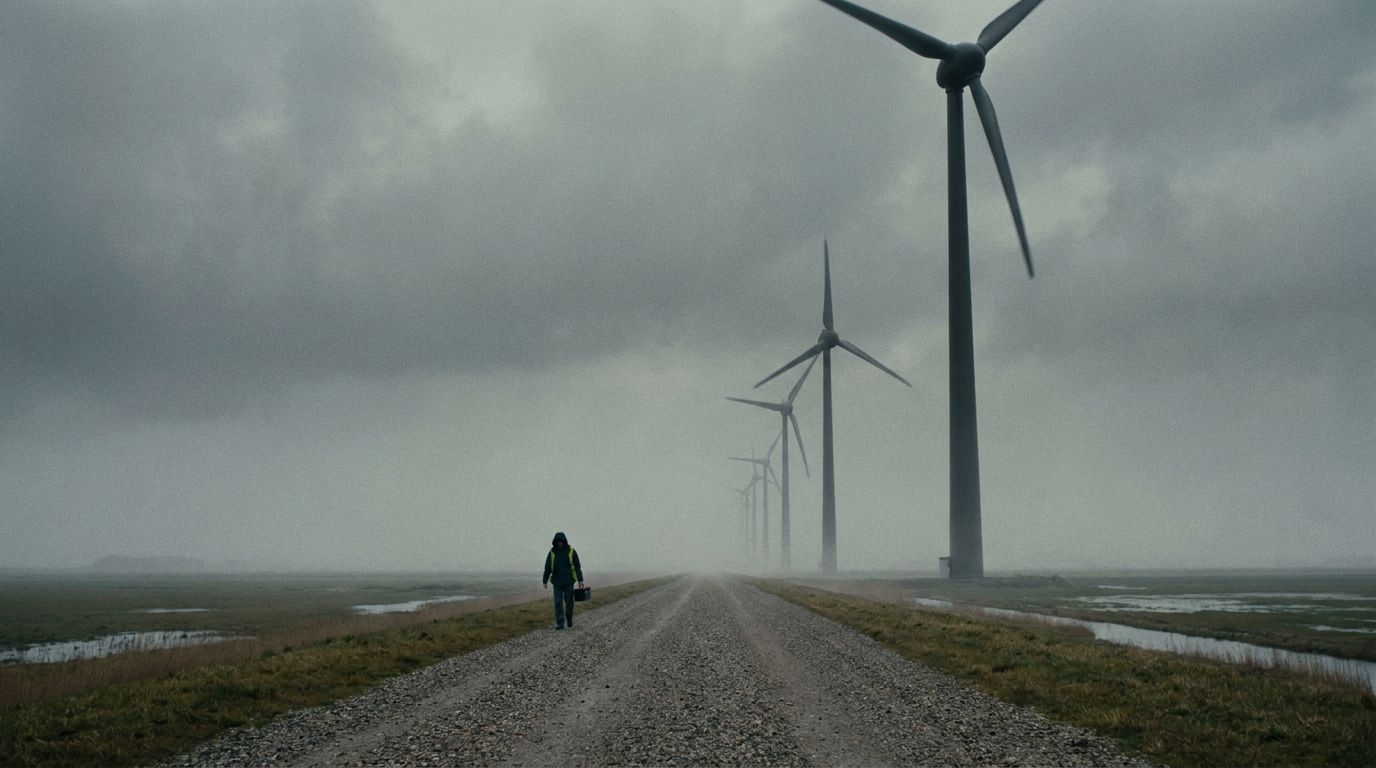
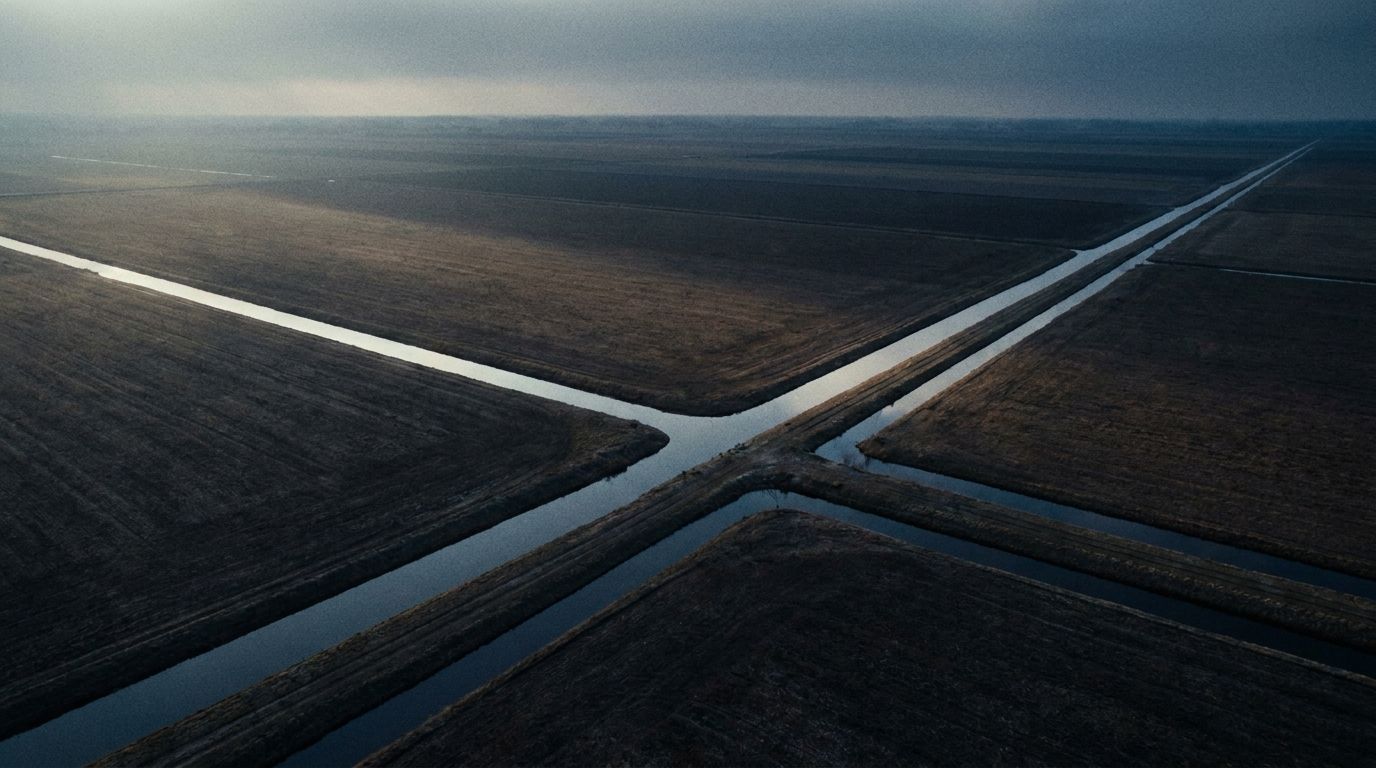
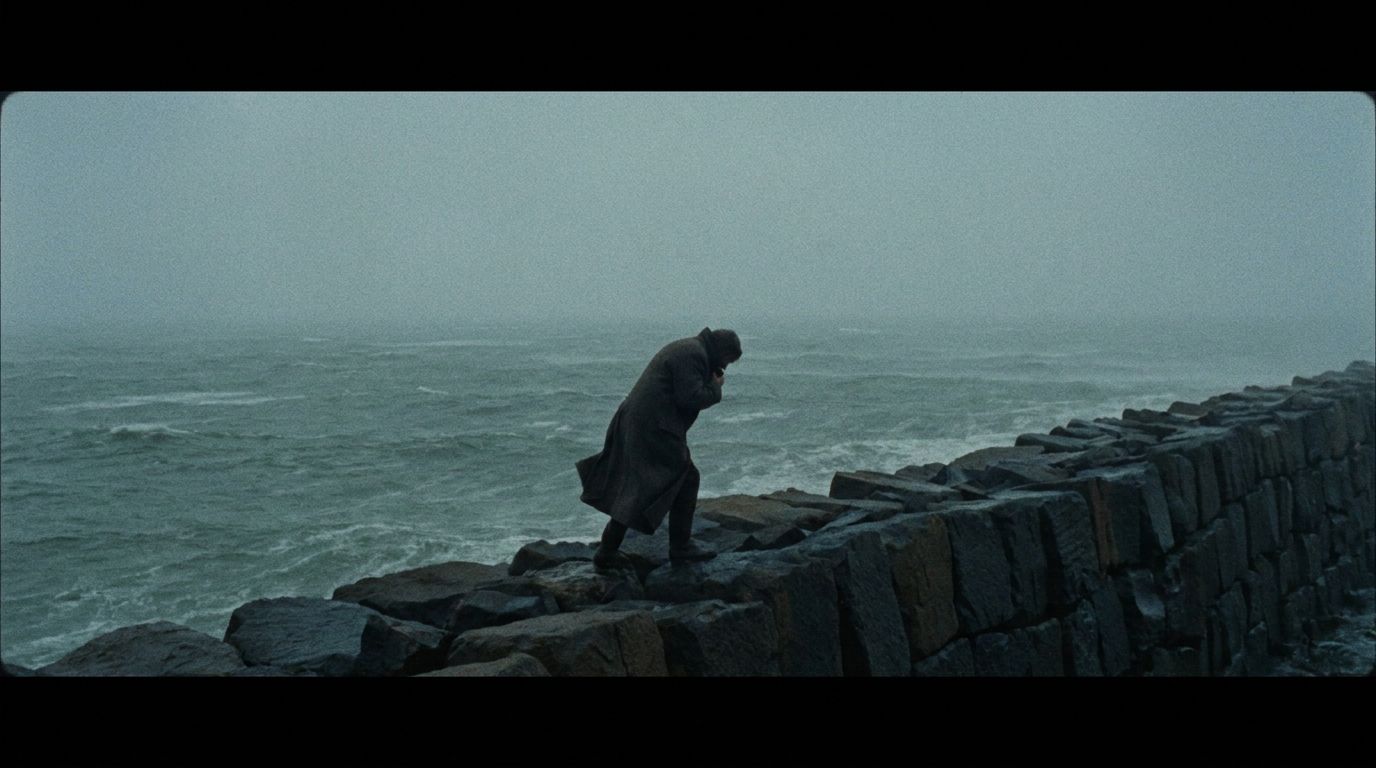
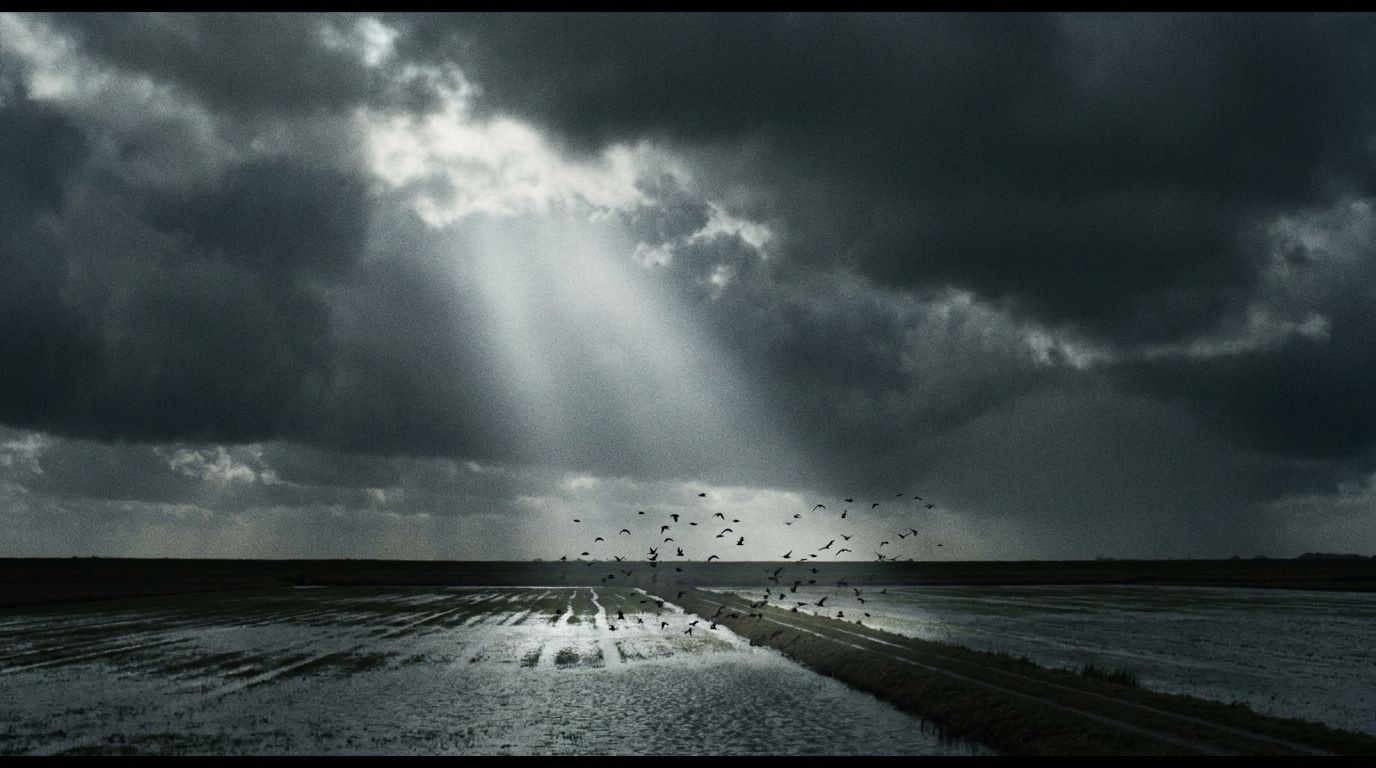
The move is not landscape-as-decoration. It is the maintained landscape cut against modern typography and honest reporting — the quiet imagery beside a clean contemporary grotesque and data an assessor can score. That tension is what makes it feel like a firm ahead of its market rather than a heritage brochure — and genuinely distinctive in a category of orange vests. One direction among several for the workshop, but a bold one.
What this means
Every finding points the same way — Vlietstra has the substance and the trust; what is missing is legibility and the discipline to express it.
| Finding | The move |
|---|---|
| Deep trust, invisible in the brand | An identity of confident restraint — benchmark De Grebbe and Fluvia, not the orange-vest middle |
| The archive is the differentiator, and it is unpublished | Claim the anchor — "we already know your assets" — and build the portal that proves it |
| Repair-first exists as instinct, not as evidence | Add up the archive numbers; publish the record |
| One-page site, no findable depth | A real site around the work + one recurring flagship artifact |
| Invisible to AI answers | Consistent worldview language + modest editorial density — the bar is low |
| Local reach without a strategy | One lane (LinkedIn), the crews and the assets, anchored |
The leaders in this landscape do not win with bigger machines — they win with a clearer worldview, expressed with craft. Vlietstra already has the rarest inputs: the archive, the renewals, and crews people trust. What is missing is the message. That is exactly what the brand workshop sets out to settle.
Sources & reliability
Method: in a real engagement this section lists every source consulted — live-site audits, tender archives, trade coverage, databases — with links, dates, and reliability flags. Interpretive reads are labeled as such; figures are point-in-time and flagged where third-party or unverified.
Flagged as estimate [EST]: all follower counts and market figures carry the estimate flag with a stated tolerance (here ±10%) and collection date.
This document: the public example. Every firm, figure, tagline, and quote is invented; nothing here describes a real market. The structure — five angles, three scales, proof before anchor, sources last — is the deliverable.
© 2026 Studio Noord